

Jacquard Denim: A New Aesthetics of Denim Blending Retro and Innovation

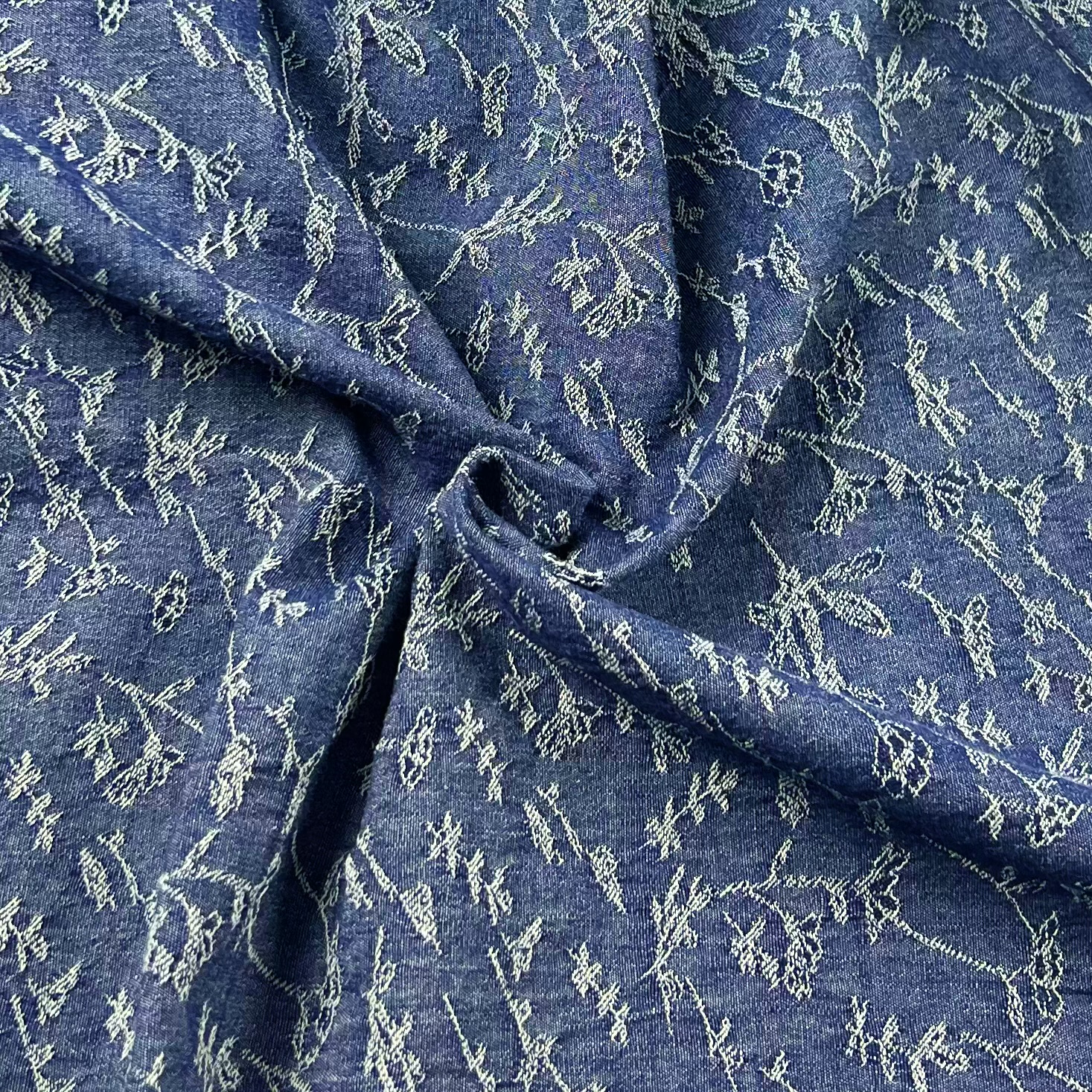
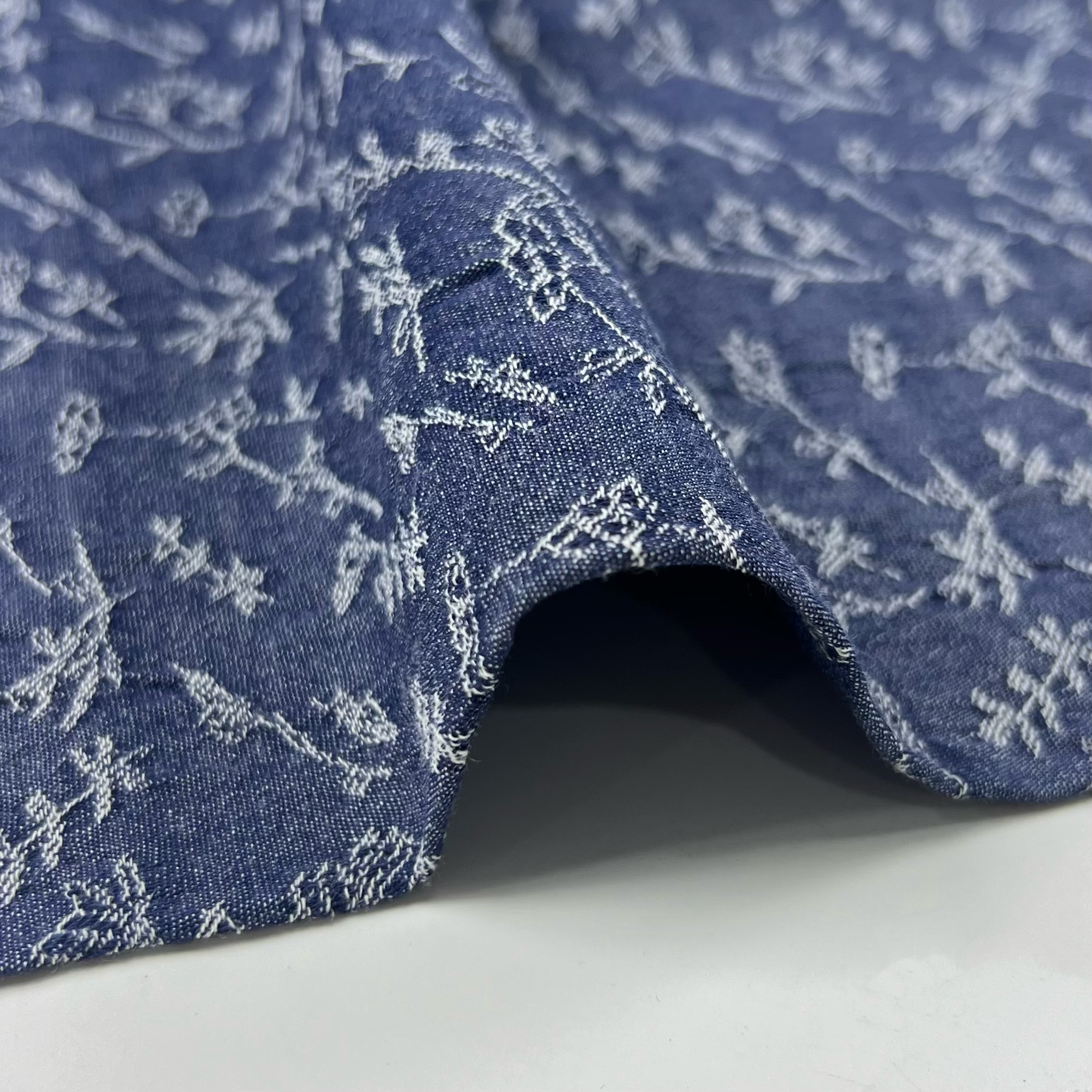
When it comes to denim, most people think of classic indigo and twill texture. However, jacquard denim is breaking the rigid impression of denim with the dual advantages of "craftsmanship + design". This fabric, which weaves three-dimensional patterns on a denim base via jacquard looms, not only retains the wear-resistant texture of denim but also endows products with unique recognition through customized patterns, becoming a trend focus in the textile industry in 2026. From monogram items of luxury brands to innovative applications of sustainable fabrics, jacquard denim is reconstructing the new boundary of denim fashion.
I. Decoding Jacquard Denim: Core Craftsmanship and Category Characteristics
The core charm of jacquard denim lies in "patterns woven into the fabric" rather than post-dyeing and printing. Its process logic is significantly different from that of traditional denim, creating unique product value.
1. Core Process Principle
Unlike the plain and twill weaves of ordinary denim, jacquard denim controls the interweaving sequence of warp and weft yarns through jacquard looms, directly weaving geometric patterns, letters, floral motifs, etc., into the fabric texture. Warp yarns mostly adopt classic indigo-dyed yarns, while weft yarns can be matched with colored yarns, fancy yarns, or functional fibers. Through loop-forming weave, double-sided jacquard and other processes, it forms a three-dimensional effect with distinct concavity and convexity, as well as interlaced virtual and real patterns. High-end jacquard denim also incorporates materials such as Lenzing Tencel™ Lyocell and Merino wool, balancing soft hand feel and environmental protection.
2. Main Category Classification
- By Pattern Complexity: Divided into small jacquard and large jacquard. Small jacquard, featuring simple geometric patterns and delicate floral designs, is suitable for daily clothing; large jacquard can present complex patterns such as elaborate flowers and brand logos, commonly used in luxury items and high-end customization, such as the classic Monogram jacquard denim from LV's Jacquard Denim collection.
- By Material Innovation: Including recycled fiber jacquard denim (e.g., Isko's jacquard series made of Re&Up recycled fibers), functional jacquard denim (incorporating heat-generating polyester and elastic spandex), and environmentally friendly dyeing and finishing jacquard denim (combining plant dyeing and cold transfer technology).
- By Style Positioning: Retro-style jacquard denim (e.g., MLBKIDS' denim monogram series, integrating retro prints with street style), minimalist jacquard denim (low-key hidden pattern design, suitable for commuting scenarios), and playful jacquard denim (color-blocked dot matrix, irregular patterns, catering to the aesthetics of the new generation).
II. 2026 Jacquard Denim Trends: Dual Empowerment of Environmental Protection and Design
Combined with the SS26 China denim fabric trends and global market dynamics, jacquard denim is evolving towards three directions: "sustainability, scenario diversification, and process refinement", becoming a key to brands' differentiated competition.
1. In-depth Integration of Environmental Protection Technology
Sustainability has become the core competitiveness of denim fabrics, and jacquard denim has achieved remarkable environmental innovations in production. The cold transfer jacquard technology jointly developed by SHEIN and Changsheng Technology can save 70.5% of water consumption. It directly prints patterns into yarns through digital printing, reducing the use of chemical auxiliaries and sewage discharge, and has no minimum order quantity, reducing inventory waste. Italian brand Pulvera grinds textile waste into flocking, which is applied to jacquard denim decoration, realizing resource utilization of waste with significantly lower energy consumption than traditional processes. In addition, the application of Easyindigo sulfite-free indigo dyeing technology has achieved dual breakthroughs in color presentation and environmental performance of jacquard denim.
2. Style Trend: Retro Revival and Diversified Collision
In 2026, jacquard denim reclaims retro genes while integrating modern design language: first, monogram jacquard continues to gain popularity, with brands combining classic logos with denim texture to create items with both recognition and retro feeling, such as Tory Burch's T Monogram denim jacquard bag, which matches light blue denim with white patterns, featuring both literary and practical qualities; second, integration of natural textures, influenced by the "Wandering" trend theme, jacquard denim is paired with yarn knots and slight washing effects to present a light, breathable natural texture, suitable for coats, dresses and other diversified scenarios; third, material collision innovation, such as Bottega Veneta combining its iconic Intrecciato weaving process with jacquard denim, creating a contrasting beauty between soft denim and three-dimensional weaving.
3. Continuous Expansion of Application Scenarios
Jacquard denim has broken through the boundaries of traditional clothing and extended to multiple categories: in the clothing field, it covers denim jackets, dresses, work pants, etc., and MLBKIDS' denim monogram jacquard dress is suitable for multiple scenarios such as opening ceremonies and club activities; in the accessories field, it includes bags, shoes, hats, scarves, etc., and LV's jacquard denim bag presents a high-end vintage effect through sandstone whitening treatment; in the home furnishing field, it is also used in soft decorations such as throw pillows and curtains, creating a retro home atmosphere with indigo jacquard texture.
III. B-end Core Application Guide: Selection, Control and Supply Chain Optimization
1. Key Points for B-end Procurement and Product Development
For fabric buyers and clothing brands, the selection, production control and supply chain adaptation of jacquard denim directly determine product competitiveness and cost-effectiveness, which should be carried out around three core aspects: process feasibility, compliance and efficiency optimization.
- Process Adaptation and Efficiency Improvement: For small-batch customization and quick-response orders, cold transfer jacquard technology is preferred. The AI washing denim process jointly developed by Beijiang Textile and Changsheng Technology reduces the traditional 17 processes to 4, with no minimum order quantity, accurately meeting the needs of flexible supply chains. At the same time, it features clear ink dots, high color saturation, and can achieve complex effects such as double-sided different colors. For mass production, AI intelligent jacquard looms are recommended. Shanghai Dingtian Fashion uses AI technology to complete jacquard design drawings in 2 minutes and realize rapid sampling in 3-7 days, improving efficiency by more than 80% compared with traditional models. It can also store a digital jacquard product library to accumulate process experience assets. In the dyeing and finishing process, open-width continuous processing is preferred to avoid problems such as excessive fluff, heavy creases and unstable width caused by rope dyeing. The composite formula of phosphorus-free desizing agent TF-5107N and degreaser TF-109H can improve the quality of semi-finished products and dyeing and finishing stability.
- Material Innovation and Cost Balance: For high-end product lines, jacquard denim blended with Lenzing Tencel™ Lyocell and Merino wool can be selected, paired with plant dyeing processes to create differentiated products, suitable for luxury brands and high-end women's clothing needs; for mass-market lines, focus on recycled fiber materials, such as Isko's Re&Up recycled fiber jacquard series, or cotton/nylon/spandex blended fabrics. The recommended blending ratio of 47/45/8 balances elasticity and durability, while complying with environmental trends. In terms of cost control, comprehensive energy consumption can be reduced through environmental processes. Black Peony Group's Air dyeing™ indigo dyeing process can reduce water consumption by 95% and electricity consumption by 65%, significantly lowering production costs.
- Case Reference and Scenario Adaptation: Guangdong Qianjin Denim creates handcrafted fabrics through crocheted jacquard + padding and washing processes, which are suitable for casual brand coat and pants orders and have received positive market feedback; Hebi Xinge Yuan Denim focuses on jacquard denim as its core category, serving international brands such as Levi's and ANF. Its experience in adapting to overseas orders can provide references for export-oriented brands, focusing on controlling the consistency of washing effects and wear resistance. For functional demand scenarios, spandex elastic fibers can be incorporated, and the heat setting process should control the temperature at 190℃, vehicle speed at 35m/min, and overfeed at 8% to ensure that the weft shrinkage rate does not exceed ±3%, meeting the requirements of clothing version stability.
2. Quality Control and Compliance Points
B-end procurement needs to establish a full-process quality control system, while complying with domestic and foreign compliance standards to avoid market access risks.
Core Quality Index Control: Sampling inspection shall comply with FZ/T 13001-2013 "Yarn-Dyed Denim" standard, taking 2 samples of 1m×full width from the same batch. Focus on testing shrinkage rate (weft direction not exceeding ±3%), weft skew (not exceeding ±3%), color fastness (washing color change 4~5 grades, staining 4 grades, dry friction 4 grades, wet friction 3~4 grades), bursting strength (not less than 490N) and other indicators.


