

The Art of Nature: Why Bamboo Fiber Jacquard Is the Textile Masterpiece You Need

Just three months ago, the textile world witnessed a landmark event. At the TANBOOCEL Union 2026/2027 Trend Product Launch in Hangzhou, industry leaders unveiled the next generation of bamboo fiber innovation—Reboocel regenerated bamboo, a CANOPY-approved recycled fiber that marks a giant leap toward circular economy in textiles .
This launch isn't just about raw materials; it's about what bamboo fiber can become in the hands of master weavers. And one of its most breathtaking expressions? Bamboo fiber jacquard—where nature's finest meets textile artistry at its peak.
What Makes Bamboo Fiber Jacquard Special?
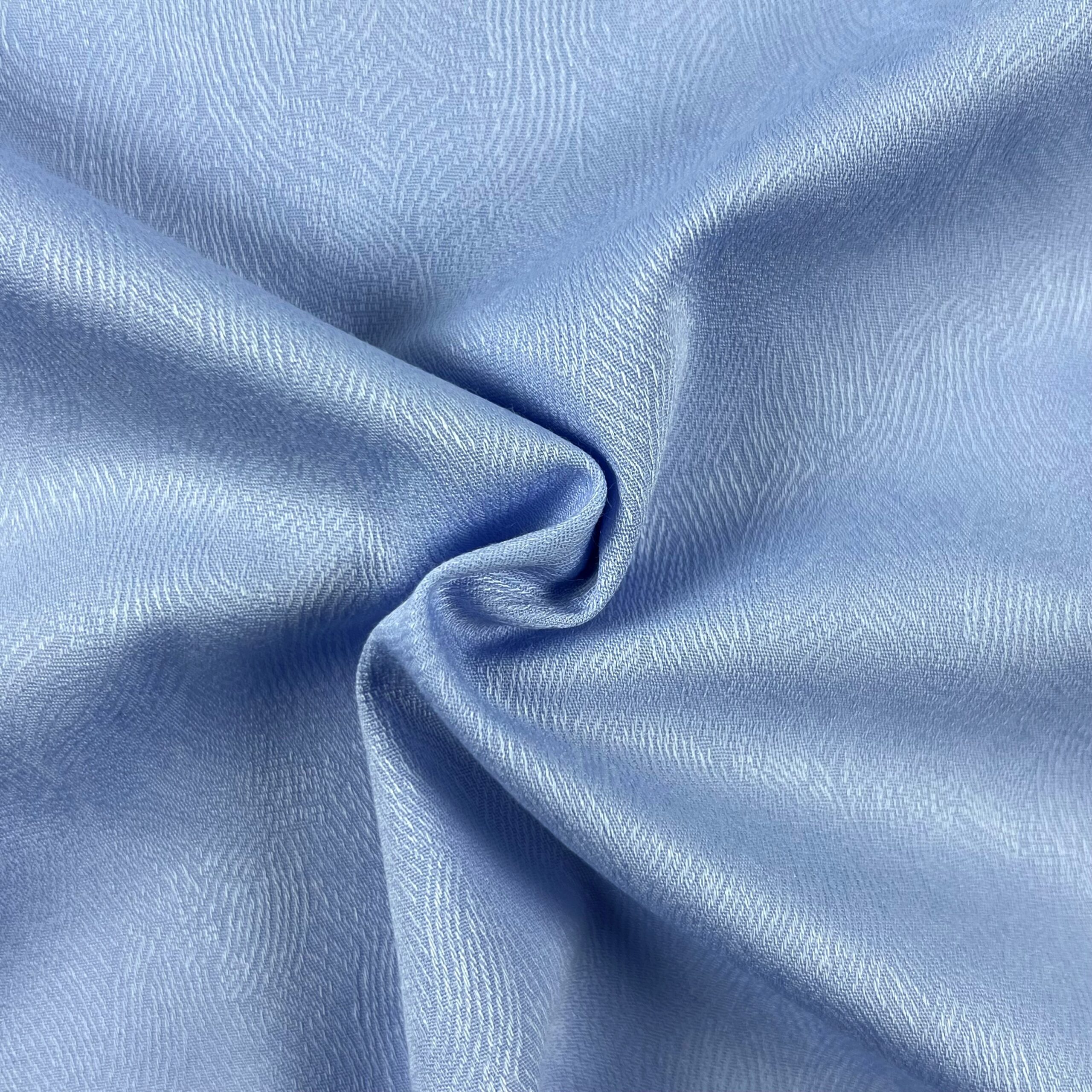
Imagine fabric that tells a story through texture. Jacquard weaving, named after Joseph Marie Jacquard's revolutionary loom, allows patterns to be woven directly into the fabric rather than printed on top. When combined with bamboo fiber, the result is nothing short of extraordinary.
Bamboo fiber itself is a marvel of modern textile science. Derived from bamboo pulp through advanced processing, it creates fibers with a unique cross-section filled with microscopic elliptical pores . This structure gives bamboo fiber its famous breathability—industry experts call it "the breathing fiber" and even the "queen of fibers" .
When this remarkable fiber meets jacquard weaving, you get:
Three-dimensional patterns that are part of the fabric's very structure, never fading or peeling
Incredible softness with a distinctive velvety feel—softer than cotton
Superior drapability that follows the body's movements gracefully
Breathable comfort that adapts to every season
The Science Behind the Beauty
What truly sets bamboo fiber jacquard apart isn't just its visual appeal—it's the hidden performance benefits woven into every thread.
1. Nature's Air Conditioner
Bamboo fiber's porous structure means it can absorb and evaporate moisture instantly. Its water absorption capacity is three times that of cotton . This makes bamboo jacquard fabrics exceptionally comfortable year-round—cool and breathable in summer, warm and cozy in winter while efficiently wicking away moisture .
2. Built-in Protection
Unlike fabrics that require chemical treatments to gain functional properties, bamboo fiber comes with nature's own defenses:
Natural antibacterial properties—tests show that bacteria on bamboo fiber fabrics are about 75% killed within 24 hours
Inherent anti-mite and anti-odor characteristics
Exceptional UV protection—bamboo fiber's UV penetration rate is only 0.06%, offering 417 times the UV protection of cotton
3. Strength That Surprises
Despite its silky softness, bamboo fiber boasts impressive durability. It has excellent resilience and abrasion resistance, maintaining its beauty through repeated use .
Hot Applications: Where Bamboo Jacquard Shines in 2026
The versatility of bamboo fiber jacquard makes it a favorite across multiple categories:
Fashion That Cares
For independent designers, bamboo jacquard offers the perfect canvas. It's increasingly used in:
Baby and children's wear—gentle on sensitive skin with natural antibacterial properties
Loungewear and home clothing—where comfort is paramount
Scarves and accessories—showcasing intricate patterns with luxurious drape
Home Textiles Elevated
This is where bamboo jacquard truly comes into its own:
Bedding sets—four-piece ensembles that combine visual luxury with sleep-enhancing comfort
Curtains—filtering light through textured patterns
Decorative pillows and throws—adding dimension to any room
Table linens—from elegant dining covers to casual settings
Bamboo Jacquard vs. Other Fabrics: Making the Choice
| Feature | Bamboo Fiber Jacquard | Cotton | Polyester | Silk |
|---|---|---|---|---|
| Softness | Velvety, luxurious | Soft but variable | Can feel synthetic | Smooth but delicate |
| Breathability | Exceptional—"breathing fiber" | Good | Poor—traps heat | Good but varies |
| Moisture Absorption | 3× cotton's capacity | Baseline | Minimal | Moderate |
| Antibacterial | Natural, inherent | None—requires treatment | None | None |
| UV Protection | 417× cotton's protection | Minimal | Minimal | Varies |
| Eco-Friendliness | Biodegradable, renewable | Biodegradable, water-intensive | Petroleum-based | Natural but resource-intensive |
Caring for Your Bamboo Jacquard Treasures
To preserve the beauty and performance of bamboo jacquard fabrics, follow these expert guidelines:
Gentle washing—Use mild detergent, avoid bleach and strong alkaline cleaners
Cool water only—Never use hot water or high-temperature soaking
No harsh wringing—Bamboo fiber's strength decreases when wet; gently press or squeeze
Dry in shade—Avoid direct sunlight to maintain softness and prevent fading
Low-temperature ironing—If needed, use low heat
Initial rinse—For new items, rinse once before first use to remove surface residues
Storage—Keep in cool, dry places away from direct light
The Sustainability Story: Beyond Greenwashing
Bamboo fiber's eco-credentials run deep:
Renewable resource—Bamboo grows rapidly without fertilizers or pesticides
Biodegradable—Returns to nature at end of life
Low carbon footprint—The latest Reboocel regenerated bamboo reduces CO2e by 0.4kg per kilogram of product compared to conventional options
Certified sustainable—With FSC-certified pulp and RCS-certified recycled content options
The recently launched Reboocel regenerated bamboo represents the next frontier—using 30% RCS-certified recycled bamboo pulp blended with 70% FSC-certified virgin pulp, creating a truly circular textile solution .
Design Possibilities: Texture That Tells Stories
What makes jacquard so special is its ability to create:
Raised patterns that you can feel
Intricate motifs from botanical to geometric
Textured surfaces that catch light differently from every angle
Dimensional designs that printed fabrics can never achieve
Whether it's a French vintage botanical pattern on a tablecloth or subtle geometric textures on a tailored jacket, bamboo jacquard brings designs to life in three dimensions .
Looking Ahead: The Future of Bamboo Jacquard
As we move through 2026, bamboo fiber technology continues to evolve. The recent launch of a 20,000-ton annual capacity differentiated bamboo fiber production line in Jilin signals expanding possibilities . Future developments include anti-mite fibers, protein-enhanced fibers, and advanced filling materials .
For designers and brands, this means:
More specialized bamboo fiber options for specific applications
Enhanced functionality without compromising natural benefits
Growing consumer awareness and demand for sustainable luxury
Conclusion
Bamboo fiber jacquard represents the perfect marriage of nature's wisdom and human artistry. It takes the inherent benefits of bamboo—its breathability, antibacterial properties, UV protection, and eco-friendliness—and weaves them into fabrics of extraordinary beauty and texture.
For the conscious consumer, it offers luxury without compromise: stunning visuals, exceptional comfort, and a clear conscience about environmental impact. For the designer, it provides a canvas limited only by imagination.
In an era where sustainability can no longer be an afterthought and where consumers demand both beauty and responsibility, bamboo fiber jacquard stands as a shining example of what the future of textiles looks like—artful, functional, and kind to our planet.


