

The Revival of Acetate Fabric: Why This “Sustainable Silk” is Defining SS2026 Fashion

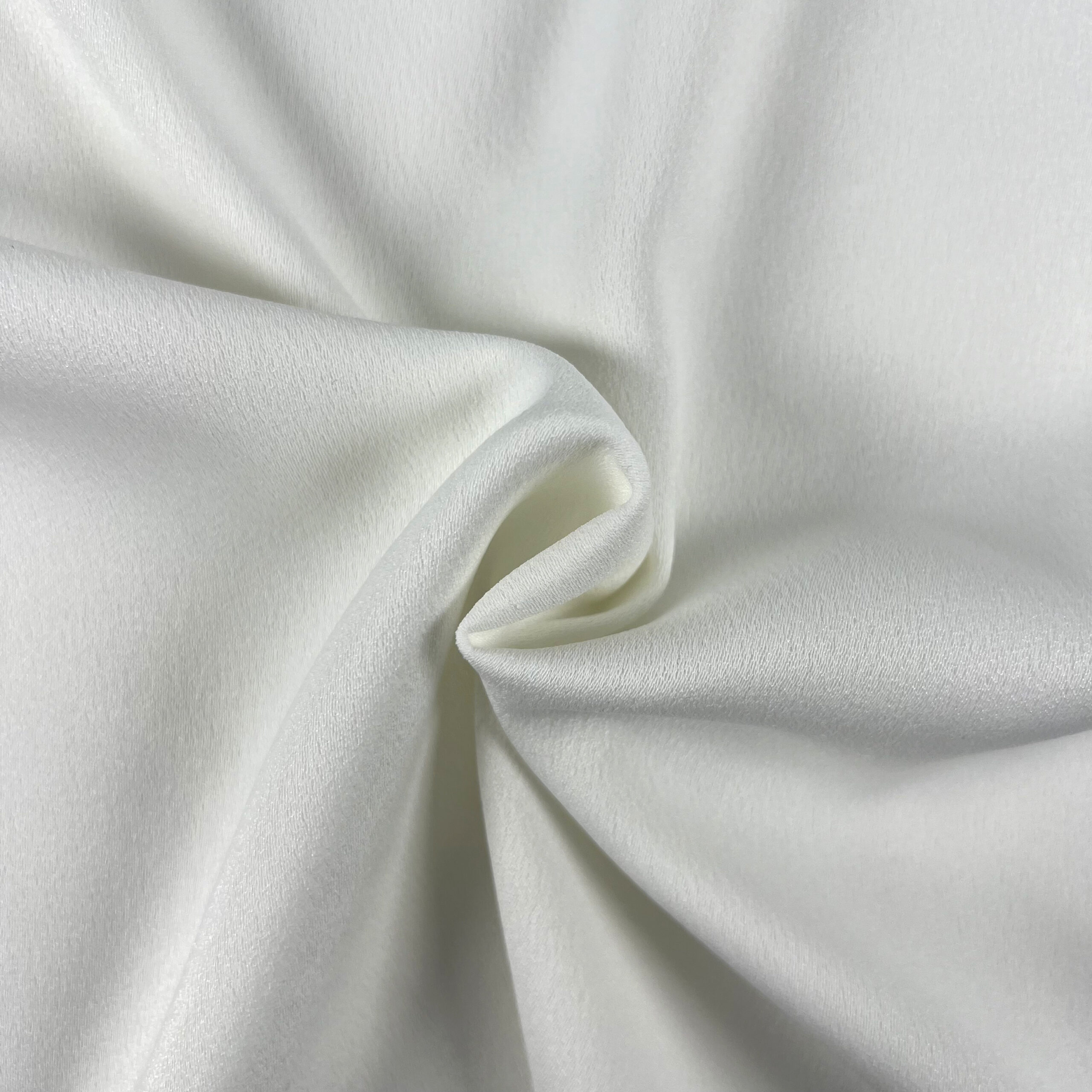
At the recent Première Vision exhibition in Paris, the textile world's attention was captured by a major breakthrough in fabric technology. Global specialty materials leader Eastman launched Naia™ Lyte, a revolutionary continuous filament yarn made from acetate .
This isn't just a product update; it signifies a major milestone for acetate fiber, which has a history spanning a century. Through technological innovation, it's reclaiming its spot in the fashion spotlight. Today, let's delve deep into acetate fiber – exploring how this material, often misunderstood as a "cheap silk alternative," is transforming into a key trend for Spring/Summer 2026 sustainable fashion.
What is Acetate Fiber? More Than Just "Rayon"
Many people easily confuse acetate with viscose or other man-made cellulosic fibers. However, acetate is fundamentally different. It's a semi-synthetic fiber derived from natural wood pulp (cellulose). By chemically reacting cellulose with acetic acid and other agents, we obtain a fiber with a unique luster and drape .
The key distinction from regular rayon lies in the molecular structure: acetate fiber contains acetyl groups. This gives it a warm, silky sheen similar to silk, along with better dimensional stability and faster drying properties than viscose .
Core Advantages: Why Do Designers Love It?
Among independent designers and niche brands, acetate fiber has always been a "well-kept secret." The reason lies in its unparalleled ability to express texture and quality.
Ultimate Silky Hand Feel and Visual Appeal
Acetate's most famous characteristic is its appearance, remarkably similar to silk. It boasts excellent luster, feels soft and smooth to the touch, and features an exceptionally elegant drape. For eveningwear, blouses, and high-end linings, it's an incredibly cost-effective choice that delivers luxury .Exceptional Dyeing Performance
If you've ever seen garments made from acetate fabric, you'll be impressed by the saturation of the colors. Acetate fibers have excellent affinity for dyes, allowing them to achieve deep, vibrant colors with high colorfastness .Functional Comfort Experience
Although it's a cellulose-based fiber, acetate has lower moisture absorbency than silk. This means it dries quickly. Furthermore, it naturally resists pilling and static cling, so it doesn't stick to the body when worn, offering a smooth, comfortable feel .
Hot Topic: The 2026 Technological Breakthrough – Naia™ Lyte
Traditionally, acetate fiber has had an "Achilles' heel": relatively low tenacity (strength). This made it prone to breaking when weaving very lightweight fabrics, limiting its application scenarios .
This is precisely where the most significant news from this February comes in. Eastman's launch of Naia™ Lyte leverages technological innovation to significantly enhance the tenacity of acetate filament yarns.
What does this mean practically? It means designers can now use acetate to develop ultra-lightweight fabrics that were previously difficult to achieve, while maintaining the desired silky hand feel and drape.
Performance Upgrade: Beyond strength, Naia™ Lyte also offers benefits like shape retention after multiple washes, a contact cooling effect, and odor management . This completely shatters the old stereotype that acetate is "high-maintenance and dry-clean only."
For independent brand owners focusing on athleisure and functional fashion, this represents a massive new selling point.
Acetate Fiber vs. Other Common Fabrics: How to Choose?
To help your customers understand more intuitively, here's a simple comparison guide:
vs. Polyester: Polyester is more durable, wrinkle-resistant, and cheaper, but it has poor breathability and a plastic-like feel. Acetate offers a superior texture and skin-friendliness, making it key for elevating product price points .
vs. Cotton: Cotton is naturally comfortable but wrinkles easily and lacks luster. Acetate inherently possesses a luxurious quality, making it perfect for evening occasions or professional settings .
vs. Silk: Silk is a delicate protein fiber, extremely high-maintenance and expensive. While offering similar luster and feel, acetate is easier to care for (some types can be washed), resistant to insect damage, and offers excellent value for money .
Care Guide: How to Extend the Life of Acetate Garments
To demonstrate expertise in your blog and potentially reduce customer service issues, be sure to emphasize key care instructions for acetate:
Read the Label: Most acetate garments recommend dry cleaning. However, based on the latest technologies (like the Naia series mentioned and some acetate knits), some are now machine-washable. Always follow the care label .
Gentle Washing: If washing by hand is suitable, always use cold water and a mild detergent. Avoid vigorous rubbing or wringing, as the strength of wet acetate is lower.
Avoid Sunlight and High Heat: Acetate fiber is heat-sensitive. Always dry in the shade. When ironing, use a low-temperature setting and always use a pressing cloth to prevent melting or creating unwanted shine .
Keep Away from Chemicals: Warn customers that acetate fiber can be dissolved by acetone (found in nail polish remover) . Keep garments away from such solvents when wearing or storing .
Sustainability: This Isn't Your "Old School" Acetate
In 2026, with heightened environmental awareness, discussing fabrics inevitably involves sustainability. While traditional acetate production involved chemical processes, the industry is undergoing massive change:
Sourcing Transparency: Leading manufacturers like Eastman are committed to sourcing wood pulp from sustainably managed forests and promoting transparency throughout the supply chain .
Circular Production: Newer production technologies (like the closed-loop process for producing Naia™) can recover and recycle solvents and water used during manufacturing, significantly reducing the environmental footprint.
Biodegradability: Derived from nature, acetate fiber has the potential to biodegrade under specific conditions. This is a significant environmental advantage compared to synthetic fibers derived from petroleum.
Conclusion
Acetate fiber is undergoing a magnificent transformation. It is no longer "poor man's silk." Thanks to modern technological advancements, its excellent cost-performance ratio, and its potential aligned with circular economy principles, it has become one of the most noteworthy fabrics of 2026.
For independent brands, telling the story behind acetate – not just its beauty, but its technological breakthroughs (like Naia Lyte) and sustainability – will be key to enhancing brand image and attracting high-value customers.


